Upper Body
Shoulder mobility, thoracic rotation and controlled arm movement patterns for everyday reach and carry function.
A structured, category-based reference of functional exercises with clear step-by-step instructions and movement quality notes.
Exercises are grouped by body focus so you can quickly find the right movement for your session type.
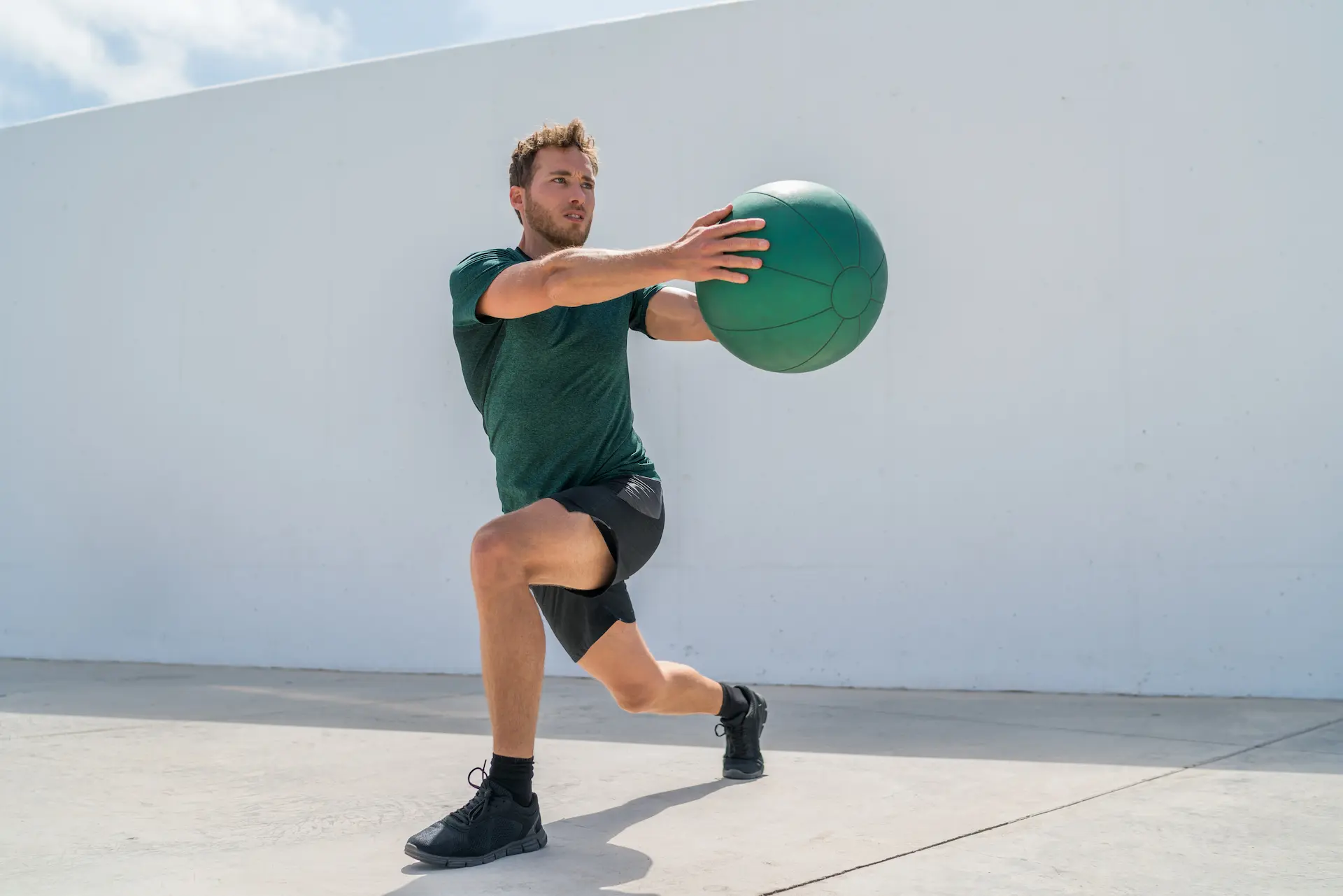
Shoulder mobility, thoracic rotation and controlled arm movement patterns for everyday reach and carry function.
Hip mobility, knee tracking, ankle stability and foundational squat and hinge patterns for standing and walking.
Deep stabilisation exercises that support spinal alignment and transfer force efficiently across movement tasks.
Multi-joint movement patterns that coordinate upper and lower body together for real-world functional tasks.
Select any exercise to expand full instructions, sets, reps and movement quality notes. Tap to open or close.
Stand or sit with your spine long and feet hip-width apart.
Raise both shoulders up toward your ears, then roll them back and down in a smooth, controlled circle.
Complete 6 rotations backwards, then 6 rotations forwards. Keep your neck relaxed throughout.
Sit on the floor with knees bent, feet flat. Place your fingertips lightly behind your ears.
Keeping your lower back still, rotate your upper body to the right as far as feels comfortable. Pause briefly.
Return to centre, then rotate to the left. Repeat alternately, breathing out as you rotate.
Kneel on your right knee, left foot forward so your left knee is at 90 degrees.
Keep your torso upright and gently shift your weight forward until you feel a stretch at the front of your right hip.
Hold for 30–40 seconds. Breathe steadily. Return to start and switch sides.
Lie on your back with knees bent, feet flat on the floor hip-width apart. Arms resting at your sides.
Press through your heels and lift your hips until your body forms a straight line from shoulders to knees.
Squeeze your glutes at the top for 2 seconds. Lower with control. Repeat.
Lie on your back with arms pointing straight up toward the ceiling and knees bent at 90 degrees, shins parallel to the floor.
Slowly lower your right arm overhead and extend your left leg toward the floor simultaneously. Keep your lower back pressed gently into the floor.
Return both limbs to the starting position. Alternate sides for the full set.
Stand with feet shoulder-width apart and toes turned out slightly. Arms can reach forward for balance.
Sit your hips back and down, keeping your chest lifted and knees tracking over your toes. Descend to a comfortable depth.
Press through your whole foot to stand back up. Keep your core gently braced throughout.
Stand with feet hip-width apart. Place your hands lightly on your hips to monitor your pelvis position.
Push your hips back behind you while maintaining a long spine. Let your torso naturally tip forward.
Drive your hips forward to return to standing. Feel the back of your thighs engage as you do so.
Stand in a clear space. Step forward with your right foot while swinging your left arm forward simultaneously.
Step forward with your left foot and swing your right arm forward. This is the natural gait pattern — now make it deliberate and conscious.
Vary the tempo: slow for four steps, normal for four, slow again. Focus on smooth arm-leg opposition throughout.
Applying these principles across all exercises can help make your movement practice feel more comfortable and purposeful.
Moving slowly through a full range of motion builds better body awareness than rushing through repetitions. Quality precedes quantity in every session.
Exhale during the effort phase and inhale on the return. Consistent breathing prevents unnecessary tension and supports core stability.
Each body is different. Work within a range that feels stable and free from sharp discomfort. Gradual expansion of range comes with consistent practice.
Pause between sets and briefly notice your posture — feet, knees, hips and spine. Small alignment corrections can help you get more from each exercise.
Rest between sets allows your nervous system to integrate the movement pattern. A 30–60 second pause is appropriate for most exercises in this guide.
Returning to the same exercises over multiple sessions builds movement skill progressively. Consistency over time tends to support steadier progress than occasional intensity.